Real cost of rubbish collection for London businesses
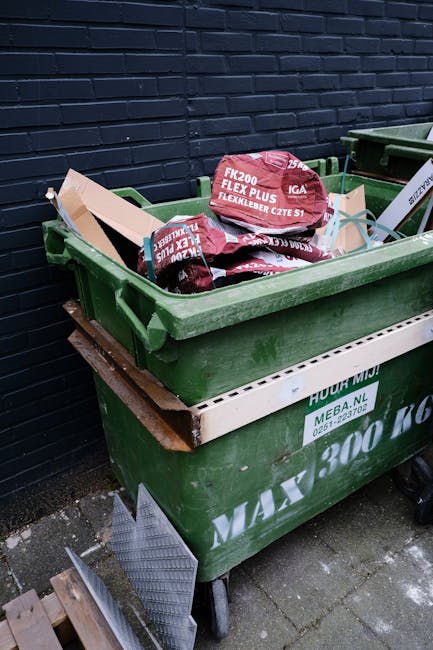
If you run a business in London, rubbish has a way of turning into a quiet budget leak. One week it is a handful of bin bags. Next week it is cardboard, office clutter, old furniture, packaging from deliveries, and that one broken fridge everyone keeps pretending will sort itself out. Truth be told, the real cost of rubbish collection for London businesses is rarely just the price on a quote. It is the time, disruption, compliance risk, missed collections, and the hidden admin that come with keeping waste under control.
This guide breaks down what businesses actually pay for rubbish collection in London, what affects the cost, how the service usually works, and where the expensive mistakes tend to creep in. If you are comparing providers, planning a move, or simply trying to understand why one quote looks low and another looks oddly high, this is for you.
One quick note before we begin: every site, shop, office, and warehouse has different waste patterns, so the most useful way to think about cost is not as a single figure, but as a bundle of moving parts. That is where the real savings are.
- Why the real cost matters
- How rubbish collection works
- Key benefits and practical advantages
- Who needs this service
- Step-by-step guidance
- Expert tips for better results
- Common mistakes to avoid
- Tools, resources and recommendations
- Law, compliance and best practice
- Options and comparison
- Case study / real-world example
- Practical checklist
- Frequently asked questions
Why Real cost of rubbish collection for London businesses Matters
The headline price of rubbish collection can look straightforward. A collection fee, maybe a call-out charge, perhaps a bin lift or a load-based rate. But businesses do not pay only for removal. They pay for certainty. They pay for not having staff standing around with sacks in a corridor. They pay for avoiding smells, pests, blocked fire exits, and that awkward Monday-morning moment when waste has not been collected and the site already looks a bit tired.
In London, the stakes are higher because access is often tighter, parking is less forgiving, and schedules are more compressed. A collection that works fine in a suburban industrial estate can become awkward in a busy high street, basement office, or mixed-use building. So the cost is not just financial. It is operational.
That is why experienced buyers look beyond the quote. They ask: What is included? What counts as extra? How quickly can it be removed? And, perhaps the question people ask too late: what happens if we get this wrong?
There is also the reputational angle. Clients, tenants, staff, and visitors notice waste, even if they do not mention it. A clean reception feels calm. A cluttered loading bay feels chaotic. Small details, big impression. You know the sort of thing.
For many London businesses, rubbish collection sits inside a bigger waste strategy that includes business waste removal, recycling, and occasional clearances. If those pieces are not aligned, costs tend to drift upward without anyone really spotting why.
How Real cost of rubbish collection for London businesses Works
The service itself is usually simple on the surface. The provider assesses the waste, confirms access, gives a price, and arranges collection. The detail sits underneath that simplicity.
1. Waste is identified and sorted
Different waste types carry different handling requirements. General office rubbish is not the same as bulky furniture, construction debris, electrical items, or mixed commercial waste. The more mixed the load, the more sorting is often needed. And sorting takes time. Sometimes a lot more than people expect.
2. The collection method is chosen
Businesses in London may use scheduled collections, ad hoc collections, clear-outs, sack-based pickups, or one-off clearances. A busy cafe, for example, may need a regular, reliable rhythm. A law firm vacating a floor may need a one-off office clearance. A retail unit doing a refit may need something closer to builders waste clearance because packaging, fittings, and leftover materials build up fast.
3. Access and logistics are checked
Access can change the cost more than people think. Is there a lift? Is there a loading bay? Can the vehicle stop nearby? Is there timed access? Are there stairs, narrow corridors, or concierge requirements? In London, this is where a "simple" collection becomes a proper logistical exercise.
4. The price is calculated
Pricing models vary, but most are based on some mix of volume, weight, waste type, labour, distance, access difficulty, and urgency. Same-day or out-of-hours work can cost more because it compresses planning and labour availability. That is fair enough, really. Speed has a cost.
5. The waste is removed and handled
Removal should be tidy and efficient. Good providers separate recyclable material where practical and route items correctly. If your business produces a lot of mixed waste, services such as recycling and rubbish support a more sensible long-term setup than repeatedly paying for emergency clearances.
In practice, the service is rarely just "lift and go." A decent provider is also thinking about safety, route planning, waste transfer, and what can be reused or recycled. The cheaper quote often skips some of that thinking. Sometimes on purpose, sometimes not.
Key Benefits and Practical Advantages
Yes, rubbish collection is a cost. But when it is managed well, it saves money in places that do not show up immediately on the invoice.
- Less disruption: staff can get back to work instead of moving rubbish around the building.
- Better presentation: useful for client-facing businesses, reception areas, and shared premises.
- Reduced safety risks: fewer trip hazards, blocked passages, and overfilled storage points.
- Improved compliance: businesses can be more confident that waste is handled properly.
- More predictable budgeting: planned collections are easier to cost than ad hoc panic calls.
- Better use of space: storage areas stay functional instead of becoming unofficial dumping zones.
There is also a subtle but important advantage: calm. A business that keeps waste under control tends to feel more organised overall. That may sound a bit soft, but to be fair, people notice order. Customers notice it. Staff notice it. Even delivery drivers notice it.
Expert summary: the cheapest rubbish collection is rarely the lowest-cost option once you factor in time, access issues, delays, and avoidable mistakes. The real win is a service that fits your waste pattern properly.
Who This Is For and When It Makes Sense
This matters to any London business producing regular waste or occasional bulky items. That includes offices, retail units, hospitality venues, clinics, warehouses, studios, landlords, property managers, and trades teams working across multiple sites.
It is especially relevant if you recognise any of these situations:
- your bins are overflowing before the scheduled pickup
- you have recurring bulky items like broken chairs, shelving, or packaging pallets
- you are moving office or refurbishing a workspace
- you need a one-off clear-out after an event, fit-out, or stock refresh
- your staff are spending time moving rubbish instead of doing their actual jobs
- you need a more reliable option than the local council route for commercial volumes
For some businesses, a council collection may occasionally be enough for certain waste streams, but it is not always practical for commercial pace, bulky loads, or tighter turnaround times. If you want to understand the difference between business-focused and municipal options, it can help to compare a service like commercial waste collection with council waste collection and see which one actually matches your day-to-day needs.
And if your business generates mixed rubbish rather than one neat waste type, that is normal. Most do. The trick is building a collection approach that reflects reality, not the tidy version of reality we all wish we had on spreadsheets.
Step-by-Step Guidance
If you are trying to control the cost of rubbish collection, do not start with the quote. Start with the waste itself. That is the part many people skip, and then wonder why pricing feels all over the place.
Step 1: Audit what you actually throw away
List the waste types over a normal week or month. Note the rough volume, whether it is bagged or bulky, and whether any items are recyclable, electrical, or awkward to handle. A quick walk-through at the end of a busy day often tells you more than a polished facilities report.
Step 2: Separate routine waste from one-off waste
Routine waste should be handled with a predictable collection pattern. One-off items are better planned separately. Mixing them together can make costs feel messy and can also lead to a service that is too expensive for everyday use.
Step 3: Check access and timing
Measure what matters: stairs, lifts, parking, opening hours, security procedures, and loading restrictions. In London, five minutes of traffic delay can reshape an entire collection window. That is just how the city works.
Step 4: Ask what the quote includes
Ask whether the price covers labour, loading, disposal, recycling, congestion-sensitive routing, waiting time, or difficult access. The cheapest figure is not much help if every practical detail becomes a surcharge later.
Step 5: Decide whether you need scheduled or ad hoc support
High-volume businesses often save money with a repeat plan. Businesses with irregular waste may do better with on-demand collections and occasional clear-outs. If you need flexibility, options such as rubbish collection or waste collection can be a cleaner fit than trying to force everything into one arrangement.
Step 6: Review after the first collection
Once a collection has happened, check whether the pricing matched the quote and whether the process felt smooth. Did the crew arrive on time? Was the site left tidy? Did anything unexpected crop up? Small notes here save headaches later.
A useful habit is to keep a one-page waste log. Nothing fancy. Just what left the site, when, and why. Boring? A bit. Helpful? Very.
Expert Tips for Better Results
These are the practical habits that tend to make the biggest difference over time.
- Keep waste streams separate where possible. Cardboard, general rubbish, food waste, and bulky items should not all end up in one pile if you can help it.
- Use a realistic pickup schedule. Over-collection wastes money. Under-collection creates overflow and stress. Neither is ideal.
- Plan for peak periods. Retail promotions, office moves, events, and refurbishments all spike waste unexpectedly.
- Take photos before larger clearances. It helps avoid confusion and makes quoting more accurate.
- Train staff on what goes where. One confused team member can undo a pretty good system very quickly.
- Keep access clear. If waste is stored in a way that blocks the route out, the collection gets slower and more awkward.
In our experience, the businesses that spend the least over a year are not the ones chasing the cheapest one-off pickup. They are the ones that quietly build a routine. Nothing dramatic. Just steady, well-managed habits.
If you manage multiple sites, standardise the information you collect for each one. A small checklist for access, waste type, and urgency can save a surprising amount of back-and-forth. Honestly, it is one of those dull little fixes that pays off every single time.
Common Mistakes to Avoid
There are a few mistakes that keep showing up, and they tend to make the final cost higher than it needed to be.
Choosing on headline price alone
A low quote can be attractive, especially when budgets are tight. But if it excludes labour, access complications, or proper handling of mixed waste, the final bill can creep up fast.
Not checking what type of waste you have
Misclassifying waste leads to pricing problems and, sometimes, compliance issues. A furniture-heavy office clear-out is not the same as routine bagged waste. Neither is a fridge, mattress, or electronic item.
Ignoring access constraints
London sites often have stairs, resident-only entry points, limited parking, or narrow streets. If you do not mention those things early, you may receive a quote that simply does not reflect reality.
Letting waste pile up until it becomes urgent
Urgency costs money. Always has. Probably always will. If you wait until the storage room is bursting, you remove your ability to plan and compare.
Assuming all providers work the same way
They do not. Some specialise in regular business waste, others in one-off clearances, and others in bulky or specialist loads. Matching the right provider to the job is half the battle.
Forgetting the hidden cost of staff time
If your own team spends an hour dragging items downstairs, sorting bags, or waiting around for collection, that is a labour cost too. It may not appear on the invoice, but it is real.
Tools, Resources and Recommendations
You do not need a fancy system to manage rubbish collection well, but a few simple tools help a lot.
- Waste log: a basic record of collection dates, waste type, volume, and cost.
- Photo checklist: useful for one-off clearances or when getting comparable quotes.
- Site access sheet: notes on loading bay times, entry codes, lift size, and parking restrictions.
- Waste separation labels: especially helpful in offices, back rooms, and shared workspaces.
- Budget tracker: useful for spotting whether collection costs are rising over time.
If your business also deals with furniture, broken equipment, or bulky office items, it can help to compare specific services such as office clearance, furniture removal and collection, and waste removal. The point is not to overcomplicate things. It is to stop paying a mixed waste rate for items that would be cheaper and easier to handle separately.
A small recommendation from the real world: keep one person responsible for waste decisions, even if several people can report problems. Too many cooks, as they say, and the waste budget starts wandering off.
Law, Compliance, Standards, or Best Practice
For London businesses, rubbish collection is not only a cost issue. It is also a duty-of-care issue. You need to be reasonably confident that waste is handled lawfully and by an appropriate operator. That includes understanding what is being taken, where it is going, and whether the handling method fits the waste type.
Best practice usually means:
- keeping clear records of collections and invoices
- separating recyclable material where feasible
- avoiding contamination between waste streams
- making sure waste is stored safely before collection
- using providers with proper insurance and sensible operating procedures
If your site handles sharp items, bulky furniture, electrical equipment, or heavy materials, safety matters just as much as cost. Many businesses also look for providers that take a visible approach to safe handling, such as a clear health and safety policy and transparent insurance and safety information. That is not bureaucracy for its own sake. It is peace of mind.
Compliance also affects cost indirectly. When waste is stored poorly, staff get hurt, pickups take longer, or access becomes restricted, the service becomes more expensive and less efficient. Better practice is usually cheaper in the long run. A bit unglamorous, but true.
Options, Methods, or Comparison Table
Different businesses need different collection models. The best choice depends on waste volume, timing, access, and how predictable your rubbish output is.
| Option | Best for | Typical strengths | Trade-offs |
|---|---|---|---|
| Scheduled business waste collection | Sites with regular, predictable waste | Budgeting is easier, routine is tidy, fewer surprises | Can be inflexible if waste spikes suddenly |
| One-off rubbish collection | Clear-outs, relocations, seasonal resets | Fast, simple, good for bulky or unusual loads | May be more expensive per visit than regular service |
| Commercial waste disposal | Mixed business waste needing proper handling | Useful for compliance and organised disposal | Requires more accurate waste description |
| Recycling-led collection | Businesses with cardboard, packaging, and segregated streams | Can lower disposal pressure and improve sustainability | Needs staff cooperation and sensible separation |
For many London businesses, the decision is not either/or. It is a blend. A regular pickup for everyday waste, plus an occasional bulk collection when the office needs a clear reset, works well in practice.
If you are dealing with larger household-style items in a workplace or managed property, services such as bulky waste collection and bulk waste collection may be more appropriate than a general bin uplift. That distinction matters more than people think.
Case Study or Real-World Example
Picture a small creative agency in central London. Nothing dramatic. Ten staff, client meetings twice a week, and a back room slowly filling with packaging, broken chairs, old monitors, and a filing cabinet that had clearly seen better decades.
At first, the team treated waste as an afterthought. Whoever noticed the pile would "sort it next week." Then the pile got in the way of deliveries. Then the side corridor felt cramped. Then someone tripped over flattened cardboard, and suddenly waste was no longer just waste; it was a problem.
Their first instinct was to book the cheapest one-off collection they could find. The quote looked fine until access and item mix were properly explained. The lesson was simple: what looked like ordinary clutter was actually a combination of office waste, bulky items, and recyclable packaging. Once the company separated routine rubbish from furniture and electricals, the process became smoother and the cost became more predictable.
That sort of shift is common. Businesses often think they have a "rubbish problem" when they really have a "sorting and planning" problem. Not always, but often enough.
The practical change was small: a waste log, a weekly clear-out slot, and a standing rule that old office furniture gets flagged early. Nothing glamorous. The office stopped feeling cluttered, collections became easier to price, and staff were no longer navigating a mini obstacle course every afternoon.
Practical Checklist
Use this quick checklist before you request a quote or book a collection.
- Do we know exactly what needs removing?
- Have we separated regular waste from bulky items?
- Have we checked access, parking, and loading restrictions?
- Do we know whether the items include cardboard, furniture, electricals, or mixed waste?
- Have we chosen between a scheduled service and a one-off collection?
- Have we asked what is included in the price?
- Have we allowed enough time for collection without disrupting trading?
- Do staff know where items should be placed before pickup?
- Have we checked whether recycling can reduce the overall load?
- Have we kept a record for budgeting and compliance?
If you can tick most of those boxes, you are already ahead of many businesses. Seriously. A lot of wasted money comes from skipping exactly these basics.
Conclusion
The real cost of rubbish collection for London businesses is never just the invoice total. It is the mix of labour, access, urgency, waste type, compliance, and the everyday friction that waste creates when it is not managed well. Once you look at it that way, the right decision becomes much clearer.
The goal is not simply to pay less. It is to pay appropriately, with fewer surprises and a better fit for how your business actually operates. That usually means understanding your waste, choosing the right collection model, and building a routine that keeps the whole thing calm and predictable.
Get that right, and rubbish stops being one of those nagging background problems. It just gets handled. Quietly. Properly. And that is a relief, honestly.
Get a free quote today and see how much you can save.
Frequently Asked Questions
How much does rubbish collection cost for a London business?
There is no single price that suits every business because costs depend on waste type, volume, access, and urgency. A small, straightforward pickup will usually cost less than a bulky or same-day collection. The safest approach is to compare quotes using the same waste details each time.
What affects the real cost the most?
The biggest cost drivers are usually volume, weight, mixed waste, difficult access, parking restrictions, and whether the job needs to happen urgently. In London, access alone can change the price more than people expect.
Is business rubbish collection cheaper than council collection?
Not always. Council services can suit some waste types or occasional needs, but business-focused collections are often faster, more flexible, and better suited to commercial volumes or bulky items. The better option depends on how predictable your waste is.
Why do some rubbish collection quotes look so much cheaper than others?
Cheaper quotes sometimes exclude labour, difficult access, disposal, or extra handling for mixed waste. Always check what is included before comparing prices. A low headline number can become a higher final bill once extras are added.
Do London businesses need regular waste collections?
Many do, especially offices, shops, hospitality venues, and sites with steady packaging or general waste. Regular collections help keep costs predictable and prevent overflow. If your waste output is irregular, a mix of scheduled and ad hoc services may work better.
Can I mix furniture, cardboard, and general rubbish in one collection?
Sometimes yes, but mixed loads can be more expensive and may require more sorting. Separating waste where practical often makes pricing clearer and can improve recycling outcomes.
What happens if waste is hard to access?
Difficult access can increase labour time and overall cost. Narrow staircases, limited parking, loading restrictions, and timed entry all matter. It is always better to mention these upfront than to discover them on collection day.
Is same-day rubbish collection worth the extra cost?
It can be, if you need to clear space quickly, prepare for an inspection, or remove waste that is affecting operations. Same-day service usually costs more, so it makes the most sense when speed is genuinely important.
How can a business reduce rubbish collection costs?
Separate waste streams, reduce contamination, schedule pickups sensibly, keep access clear, and avoid leaving clear-outs until the last minute. A simple waste log also helps you spot patterns and avoid repeat mistakes.
Do I need to worry about compliance?
Yes. Businesses should make sure waste is handled safely and by an appropriate provider. Good record-keeping, proper storage, and clear procedures all help reduce risk. If the waste includes awkward, heavy, or hazardous items, the importance goes up quickly.
What should I ask before booking a provider?
Ask what is included in the quote, how they handle mixed waste, whether access affects pricing, what happens if the load is larger than expected, and how quickly they can collect. Those questions save a lot of confusion later.
What is the smartest first step if my waste costs feel too high?
Start by reviewing what you are actually throwing away and how often. Most businesses find the biggest savings come from better sorting, better timing, and choosing the right service type rather than simply chasing the cheapest quote.