Flat Clearance London: Recycling and Sustainability Commitment
 Flat Clearance London is committed to making every residential removal and clearance in the capital as sustainable as possible. Our approach to London flat clearance blends practical recycling, strategic reuse and low-carbon logistics so that clearing a flat causes minimal environmental impact. We work across inner and outer boroughs and adapt to local borough rules, ensuring each clearance follows the correct local waste separation and collection regimes.
Our company has set an ambitious recycling percentage target: we aim to divert 80% of all collected materials from landfill within two years and steadily increase this toward a long-term goal of 90% reuse or recycling. This target reflects our belief that efficient flat removals and responsible disposal go hand-in-hand. Every sofa, appliance and box of waste from a London flat offers potential value, whether that is recycling, refurbishment or safe energy recovery.
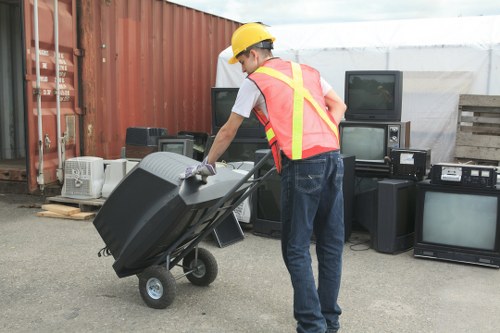 We understand that boroughs have varying approaches to waste separation — from dedicated food waste collections in some boroughs to communal recycling bins or co-mingled dry recycling in others. For instance, several council areas emphasise separate glass, paper, plastic and food streams, while others operate a mixed dry recycling collection with seasonal bulky waste pickups. Flat clearance services in London must be flexible: we audit the property, separate materials at source and comply with the local council rules for each London borough we serve.
To manage reclaimed materials responsibly, we work daily with local transfer stations and materials recovery facilities across Greater London. These include municipal transfer hubs and MRFs located to serve north, south, east and west parts of the city. Our typical transfer network routes include:
- Edmonton EcoPark and associated MRF operations serving north London streams
- Local borough transfer stations that handle separated bulky items and inert waste
- South and south-east London MRF partners who sort and forward recyclables to remanufacturing
Working with these transfer stations enables us to increase recovery rates and provide transparent waste audits. We document loads and material flows so that recyclable materials are routed to the most appropriate facility — whether that is a direct reuse partner, a charity furniture network, a specialist recycling plant for WEEE (electrical items) or a local timber recycling depot.
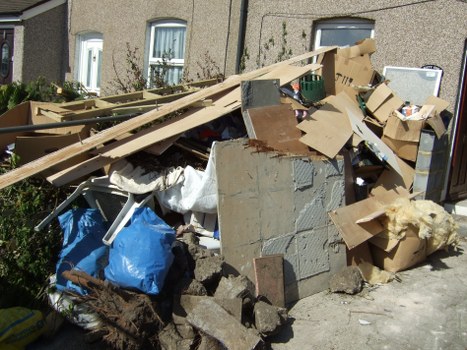 Partnerships with charities and social enterprises are central to our sustainability model. We regularly collaborate with organisations such as Emmaus, the British Heart Foundation furniture shops and local community projects that accept good-condition household items. Items that are reusable — including beds, tables, wardrobes and working appliances — are carefully assessed, cleaned and allocated to charity partners so that they can be resold or distributed to people in need.
Our charity partnerships extend beyond donations: we provide timed collections and transfer logistics to charities that run furniture reuse programmes, and we coordinate with social enterprises for upcycling and repair. This circular approach reduces waste, supports London-based community initiatives and gives old items a fresh purpose instead of sending them to energy recovery or landfill.
To make reuse practical for densely populated flats, we operate specialist teams trained to handle bulky goods in stairwells, lifts and tight corridors. Where possible, we facilitate direct handovers to charities or community schemes on site, minimising transport distances and handling, and further reducing our carbon footprint.
Our vehicle fleet is another pillar of our green programme. We run a mix of low-carbon vans, electric vehicles and the latest Euro-6 compliant models to limit emissions on urban journeys.
Low-emission logistics
Our increasing EV fleet specifically targets last-mile trips in congested central boroughs, where emissions reductions make the most environmental difference and where many London councils have strict low-emission zones. In practice, this means scheduling collections to minimise empty miles, using compact e-vans for small loads and deploying larger low-emission vehicles for bulk clearances. We constantly review routing and load optimisation to ensure each trip is as efficient as possible. Reducing miles, increasing recycling is a simple guiding principle for our operations.
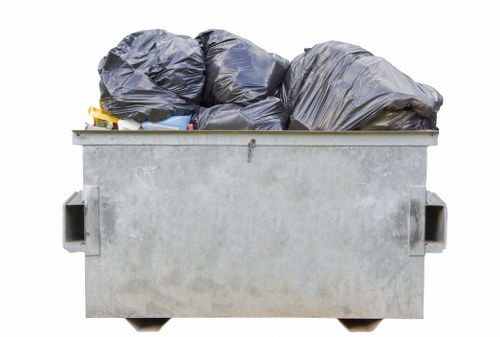 Beyond vehicles and partnerships, our
practical recycling activities
include segregation of materials on-site, labelling and documenting recoverable items, specialist disposal of hazardous waste (paints, batteries, certain electronics) and safe handling of bulky waste. Key activities include:- On-site separation of reusable furniture and working appliances for charity donation
- Sorting of wood, metal and hard plastics for direct recycling at approved MRFs
- Careful handling and transfer of WEEE to licensed processors
Flat clearance in London faces logistical and regulatory complexity, but with clear targets, strong local partnerships and a low-carbon fleet we make meaningful progress. Our targets are regularly reviewed and we publish internal performance reports to drive continuous improvement and higher recycling rates across all London boroughs.
Choosing a sustainable residential clearance means supporting a system that prioritises reuse, works with local councils and charities, and reduces carbon emissions from collection to final processing. We champion pragmatic, borough-aware solutions so that every flat clearance contributes to a greener London.